
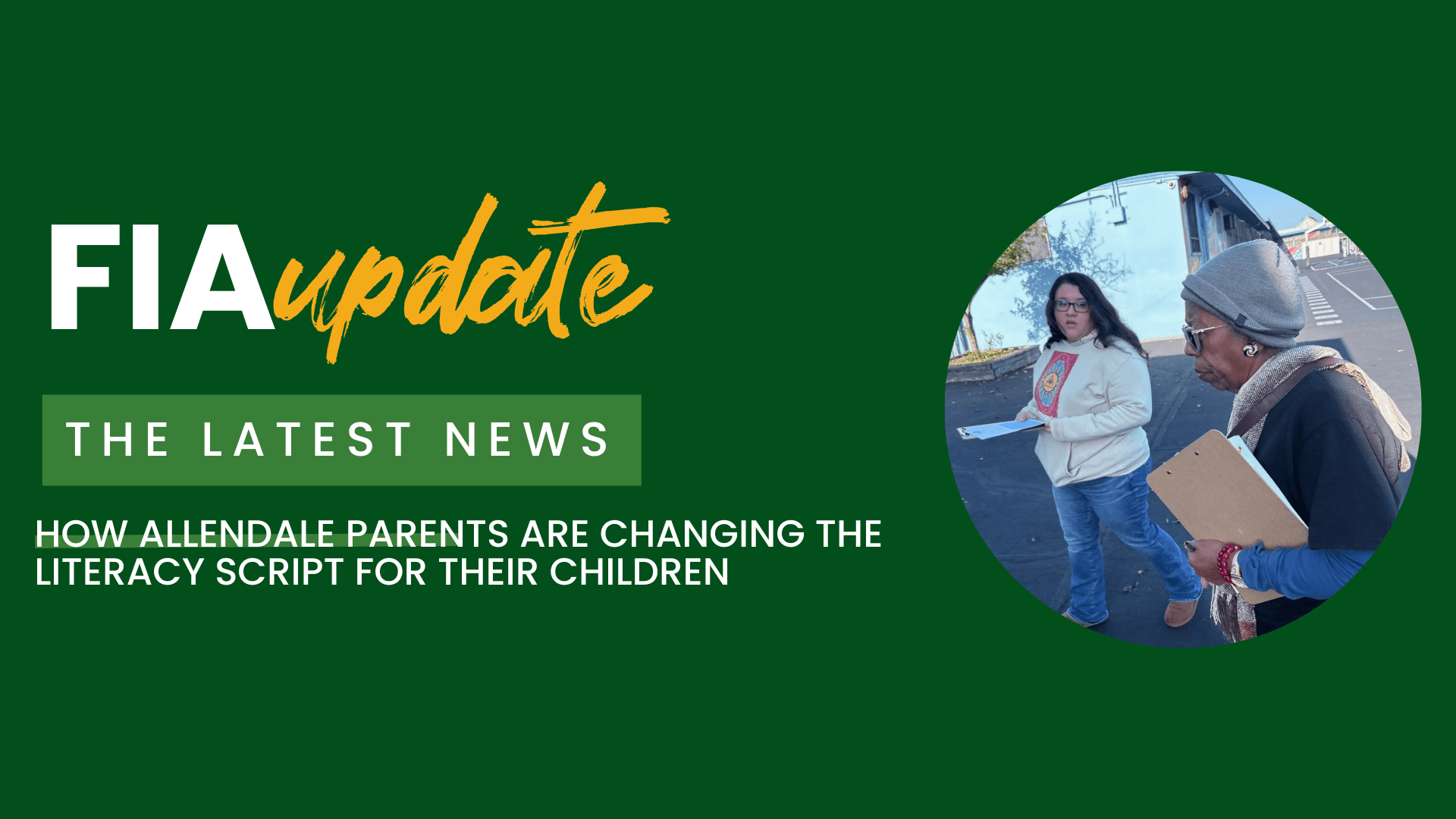

Allendale parent Elisa watched her Kindergarten son become an eager reader after struggling by applying strategies she learned at Lit for Literacy.
Elisa Saavedra watched her kindergarten son struggle to maintain attention during reading time at home.
“It was really hard to focus and keep focused,” she said. “Even the books that have one sentence per page and are four pages long.”
After applying strategies from the Families in Action Lit for Literacy workshops at Allendale Elementary, she observed an immediate transformation. “I did it for a few days during break,” Elisa said. “And then, on like day three, he was reading a book by himself. It was really cool.”
Seeing this breakthrough with her own child made her consider the impact Lit for Literacy could have on the broader Allendale community. “I feel like if there were more parents involved in it, then more kids would be ahead than where they currently are,” she said.
Elisa was one of several parents and grandparents who recently participated in an “accountability walk,” observing literacy instruction in classrooms as the culminating session of the cohort.
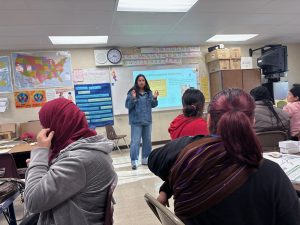
FIA organizer Paulina plays a key role in the session by preparing parents to help lead sessions through sharing their stories and reading practicing with their peers.
FIA Family Organizer Paulina Sepulveda outlined the group’s mission: First, to observe literacy instruction in the classroom. And second, “to celebrate you, our family literacy leaders, and discuss how we want to channel the power to effectively work together and increase literacy rates for your child and all of our Allendale students.”
Walking the hallways with the group was Granny Sharon Sue Haynes, a grandparent with a deep personal stake in literacy. She recalled a scarring moment from her own childhood, in second grade.
“There was a word that I didn’t know while I was standing up reading, and the class laughed at me,” she said. “The teacher didn’t reprimand them. But it bothered me, and as a result of that, I really had a passion to learn.”
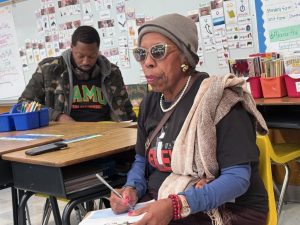
Granny Sharon Sue Haynes observes for evidence of literacy practices during the Family Accountability Walk. “Imagine what Oakland could be, if more parents knew about Lit for Literacy,” she reflected on the experience.
That passion now fuels her advocacy. She offered sharp, constructive feedback after observing a second-grade teacher. “She used the word hard,” Granny Sharon said. “Nothing’s hard, only the ground. You can do it.”
The parents entered classrooms as silent observers. They watched lessons unfold, watching to see how often students were reading or engaging with books, how many were participating, and what specific strategies the teachers used to draw them in.
They diligently recorded their evidence and questions, noting everything from effective use of visual aids and call-and-response techniques to moments when student engagement and attention appeared to wane.
In a debrief session, the parents shared their observations with one another. They celebrated a teacher who used an overhead projector and drew stories, calling her “really creative.” They discussed the challenge of engagement in older grades, noting that call-and-response worked better with younger students.
The group expressed a desire to see a full lesson from start to finish and brainstormed how to reach more parents. “If they knew (about Lit for Literacy), just think what Oakland could be,” Granny Sharon said.
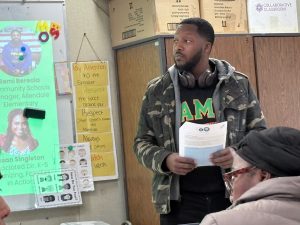
Remi Bereola, Allendale Community School Manager, pictured leading a session, hopes parents will use what they learned to hold the school accountable.
Allendale Community School Manager Remi Bereola, a former middle school teacher, sees parent engagement as a direct response to a national crisis.
“Many of our students are multiple grade levels behind in their reading levels,” he said. “There’s a crisis of literacy in this country. For us to disrupt that, we have to be informed. We have to be knowledgeable.”
He sees the Lit for Literacy cohort as an essential tool to arm parents with information.
“They are learning how to interpret the literacy data so that they can better engage and more meaningfully engage at parent-teacher conferences,” he said.
His goal is partnership and accountability. “Continuing with fidelity to implement the strategies that they learn to continue to hold us accountable as a school.”
The session closed with an invitation for parents to put their advocacy and power into action at an upcoming school celebration for kindergarteners receiving extra literacy help.
For parents like Elisa, this next step is natural. Having seen progress in her own home, her thoughts are already on the wider community.
“I’d be happy to come help other kids in this class,” she said, “because it starts when they’re little.”
Visit the FIA website to learn more about the program and why it is so special to Oakland!