
Antonio just started a new job. His daughter, in the second grade at Manzanita Community School on 25th Avenue in East Oakland, was away from the school all day on a field trip.
Regardless, it was a priority for him to be on campus with other parents observing literacy instruction, so he made the time and sat in the front row during the morning meeting, taking notes.
“I want to see the kind of lessons the teachers are doing, what they’re teaching the kids,” he says. “I want to be more involved this year. My daughter wanted me to go with her (on the field trip), and I had to tell her I had to learn about how they’re teaching literacy.”
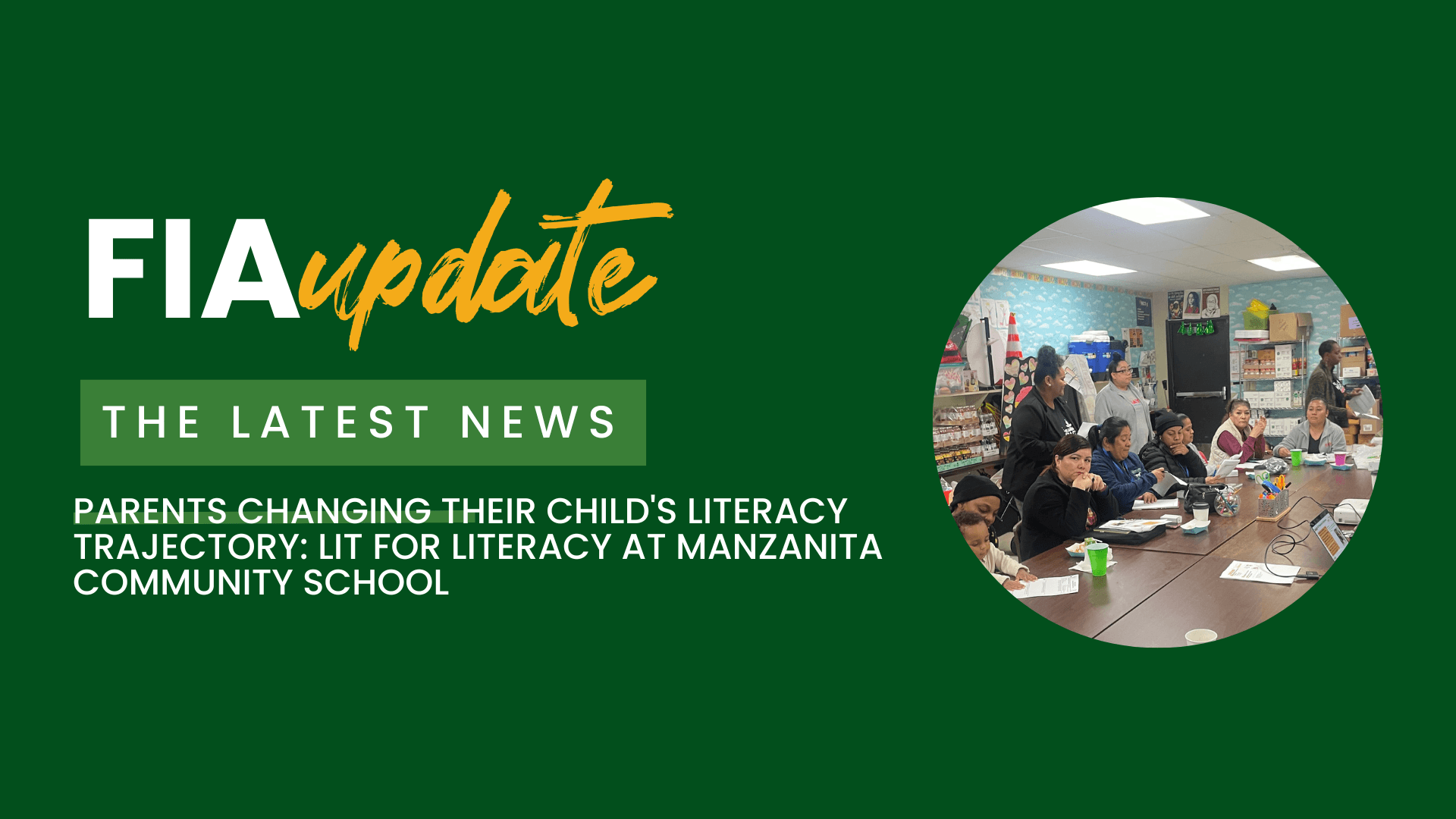
Antonio is part of a group of 15 parents who began the morning together in a Manzanita school portable classroom, gathered around a table as leaders from FIA, the East Bay Asian Youth Center (EBAYC) and the school facilitated an “Accountability Walk.”
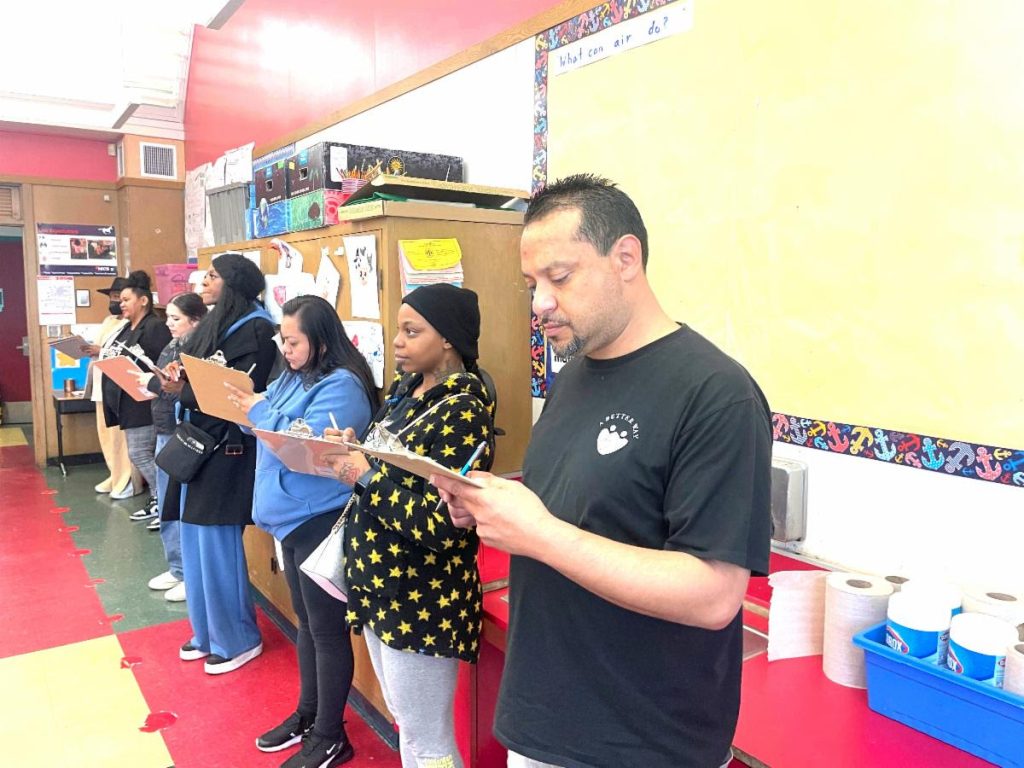
Through observing 2nd grade instruction at Manzanita, parent Antonio identified ways he can better teach his daughter at home.
They are visiting 1st and 3rd grade classrooms – four total – to observe literacy instruction, write down what they saw, and report back to the group what they learned.
Specifically, the parents are tasked with looking to see evidence of instruction in phonemic awareness and phonic or sight words. They watch for how teachers listen to students’ responses and if all students in the classroom are being supported. Each parent carries a classroom observation form to take notes.
This is the fifth session of Lit for Literacy for the bilingual group of parents. In previous sessions, they learned about the school’s vision for literacy; the importance of data, and how a strong home-school partnership can elevate student achievement; they discussed literacy strategies they can implement at home; and shared their own literacy stories with one another, and how they build power together to make lasting, positive change for Manzanita students.
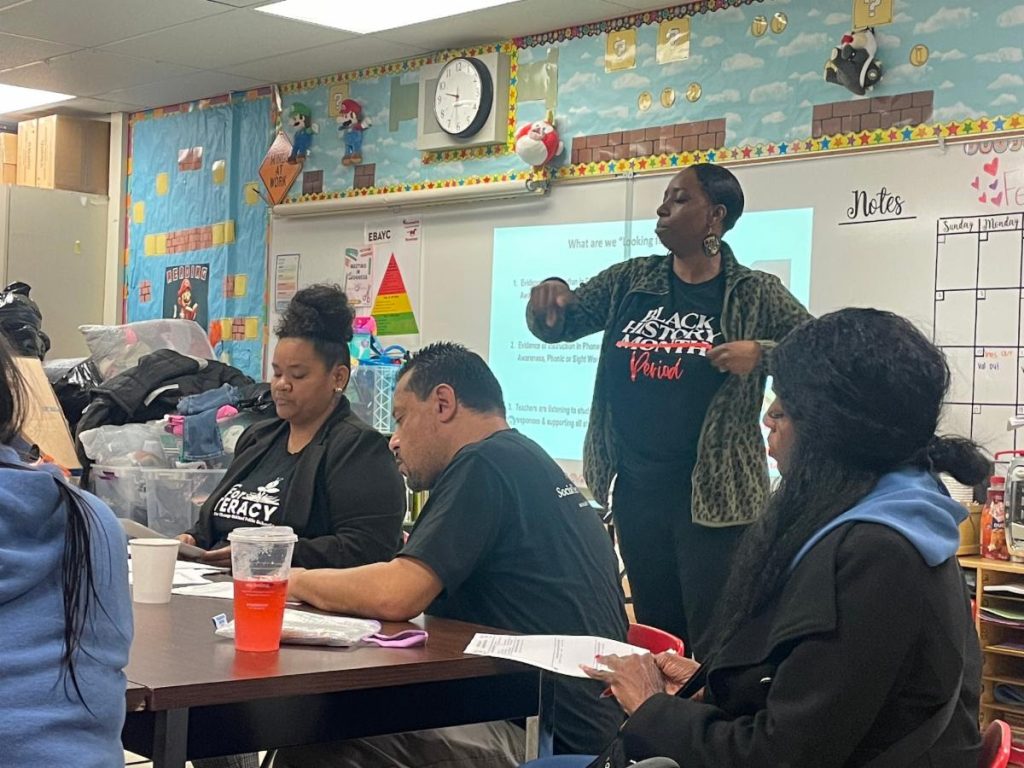
“I’m excited for you to develop an understanding about your child’s education and open your eyes to what goes on in the classroom,” LaTasha Ellison, the Manzanita Community School principal, shared with the parents. “You have an understanding of your child’s information and now you can see what happens at school.”
District 5 School Board Member Patrice Berry is one of the participants in the group. “Literacy is one of our top priorities, so it’s important for me to actually see what’s happening in classrooms,” she says. “I like this particular activity because I’m doing it with parents, hearing what they care about.”
One of the 1st grade classrooms that Antonio visits is familiar because his daughter had the teacher last year. The students are breaking down the sounds of words. “Sound out the word,” the teacher tells the class. “‘Smash.’ Ok, take out the ‘SM.” The class responds with “Ash!” “Excellent,” the teacher says.
“She’s very detail-oriented and the kids don’t really have to be told what to do or to behave,” Antonion says. In the other 1st grade classroom he observes he notices fewer instructional posters on the walls. “I think the students could use more things to look at, to help them learn,” he says.
Rochelle is a parent leader at Manzanita, with two children at the school. As she walks across the school courtyard from class to class, her 4th grade daughter runs up and gives her a big hug.
“The more tools I have as a parent will only help my kids,” she says. “As a parent who is involved on campus a lot, I’ve learned useful information I can use in my house and I can share what I’m learning with other parents.”
Principal Ellison says that while she thinks it’s important for parents to be on campus observing classrooms, teachers also benefit. “It’s good for the teachers to see that parents are invested and want the best for their children,” she says.
“Because of this environment, or where parents have come from, or their own experience in school, some may think that they don’t have the knowledge,” Ellison says. “Every parent wants what’s best for their child and it’s up to us to equip them with tools so they can uplift their student.”
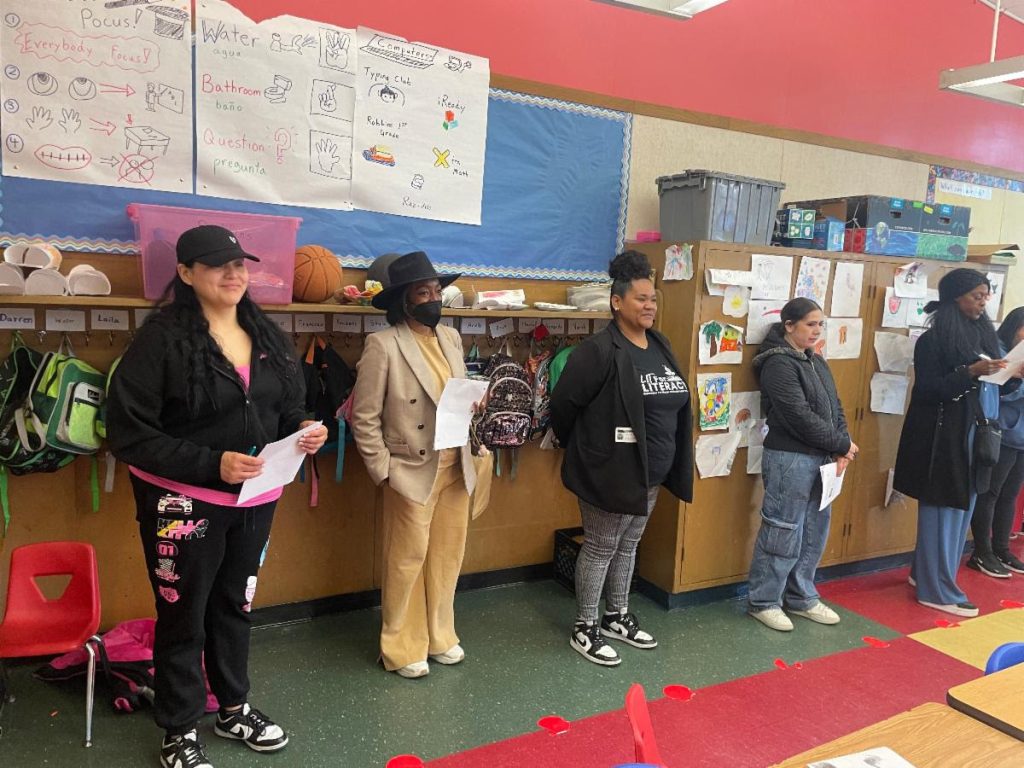
Rochelle (left) and Patrice Berry (second from left) during a classroom observation at Manzanita.
Principal Ellison says a priority for the school moving forward is to get more families involved. “This core group of parents can share their knowledge with other families,” she says.
Angela Phung, a managing director with EBAYC who works with Manzanita, was one of the facilitators for the group and she participated in the classroom observations. EBAYC also runs Manzanita’s afterschool program.
She says that bringing families on campus helps with alignment and getting everyone on the same page about what students should be learning. “We can make sure they’re getting the support they need, and that they’re where they are supposed to be with their learning,” she says.
During COVID, EBAYC established a family resource center on campus. In the early days of the pandemic, they focused on making sure families had food, and then transitioned to supporting remote learning. Now, the family resource center is a hub for parents learning how to advocate for themselves and their children.
“We need to teach parents to understand that this is their school, that they have a right to be on campus,” Angela says. “It’s all about building a space for parents to be engaged in their student’s learning and they have the power within themselves to change what education looks like for their student.”
FIA’s Lit for Literacy (L4L) program aims to improve literacy and academic outcomes for Black and Brown students. With only 20% of Oakland students reading at grade level, FIA developed this program to help families better understand their children’s academic progress and equip them with strategies to support literacy at home. The program includes four training sessions, where parents learn about their child’s performance, gain literacy tools, and develop leadership skills to stay involved in their child’s education. Since its launch in 2022, Lit for Literacy has expanded to 12 schools, and students whose parents participate have shown significant growth in early literacy scores.
Click here to learn more about L4L