
Thania is a busy mom raising four kids. She could have been at home watching her two youngest children who are not yet old enough to go to school. Yet there she was in a Lazear Elementary classroom on a weekday morning, along with her husband, Javier, and the two little children (one in a stroller) investing her time observing elementary school literacy instruction.
Thania and a group of other parents make up the Lazear Lit for Literacy cohort this year. During four zoom sessions, parents at Education for Change Public Schools learned information and strategies for helping their child improve their literacy skills, including how to read a report card and assessment data, and how to collaborate with their child’s teacher.
After building their literacy toolkit, parents then visit the EFC school their child attends to observe literacy instruction, take notes, and report back to the group. It’s called an “family instructional walk,” and for Thania, who has two children new to Lazear this year, this was definitely the place to be.
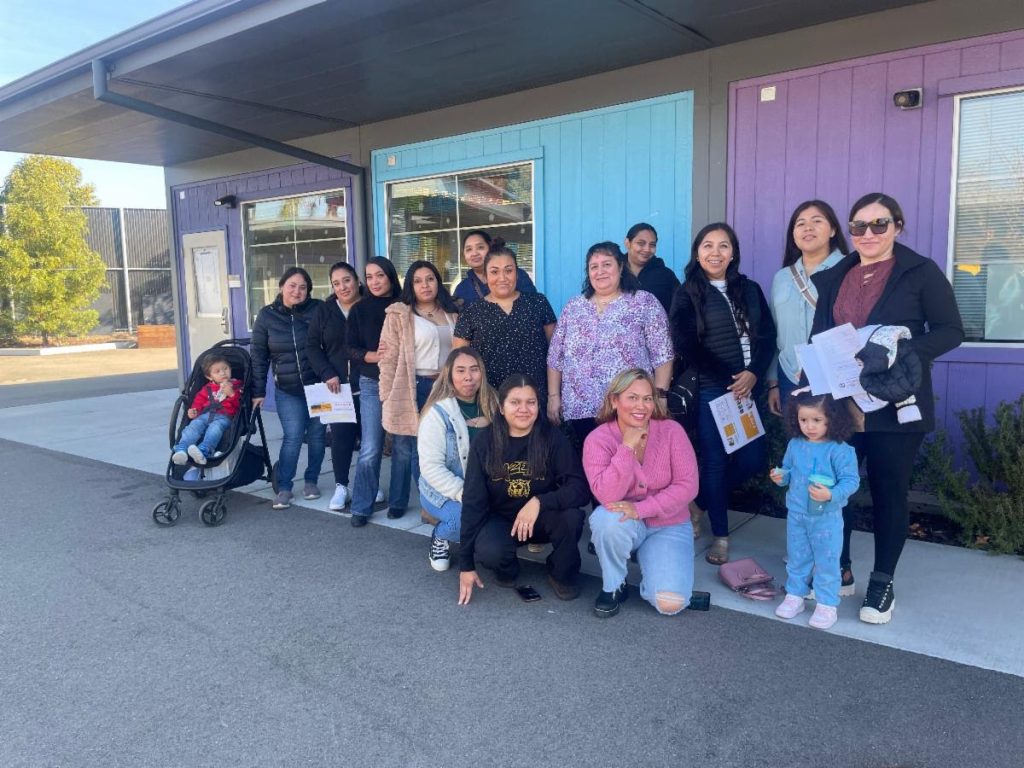
| Lazear families learning literacy strategies to help their kids at home and school |
“It’s very important for me to be here because I like to be involved in their education,” Thania said. “All my kids are going to go here, and they love to read. My husband says we have too many books.”
Parents like Thania make a powerful impact when they get involved in their child’s reading. Last year among parents who graduated from Lit for Literacy, 88 percent of their students made 30-100 points in literacy gain.
Lazear Family Coordinator Rocio Gonzalez, Principal Kaitlin Friedman and parent leaders Daisy and Sophia began the day by gathering the parents together to review what they learned in previous sessions and talk about what to look for on the Accountability Walk.
Kaitlin talked about EFC’s literacy curriculum, and how it ties into grade-level work: “This is the floor, not the ceiling, of what your kids should be learning,” Kaitlin told the parents. When you’re in the classroom, Kaitlin told the parents, look out to see if students are engaged and if they are getting feedback from the teacher.
Kaitlin said that as a school leader, she sees parents as vital partners in positive student outcomes. “We revised our mission statement based on family input, and I’m proud we did that because it’s grounded in what families want,” she said, “which is making sure their kids are prepared, academically and socially, for high school.”
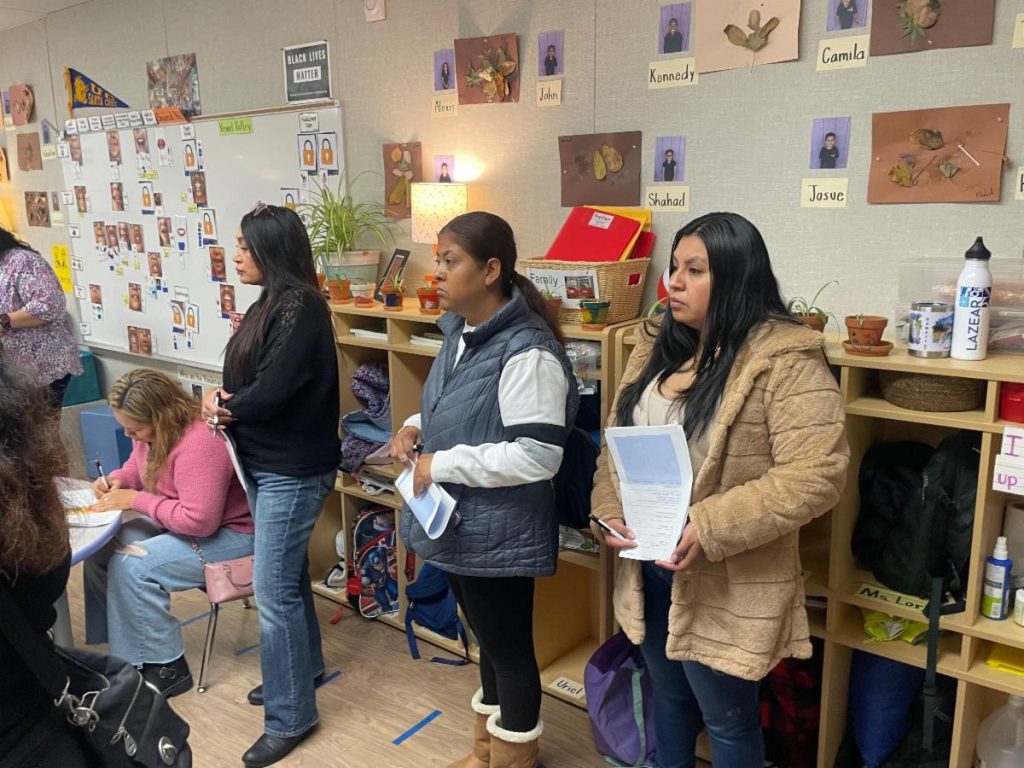
Parents also received packets to write down their notes and observations on the family instructional walk, such as: “I noticed… I observed … A question I have is …” While Javier watched over the two little ones, Thania (pictured to the left) and the other Lazear parents grabbed their pens and split up to observe classrooms.
Thania first observed a kindergarten classroom. Most of the children were seated on the carpet as the teacher read aloud the book, “Just a Minute!: A Trickster Tale and Counting Book.” A few students on the corner of the carpet were listening to a teacher’s aid read the same book in Spanish.
Thania said what stood out to her observing that classroom was how the teacher really brought the students into the story, rather than them just sitting there as passive listeners.
“She really included them in the text by making sounds, then all the students would make sounds, and they moved, like waving their arms when they were blowing out candles,” Thania said. “I think that helps with comprehension, with getting them involved with the story.”
The second classroom Thania and other parents visited is for first graders. Most of the students work individually on computers. “I like how they are working independently,” Thania observed. “In first grade, some students are barely reading one word at a time, and others are reading full sentences.”
In the third classroom, Thania observed a group of kindergarten students in a small group, working with a teacher to sound out words slowly. Thania said she was impressed with the students’ enthusiasm and focus as they eagerly sounded out words like “tub,” “mad” and “bat.”
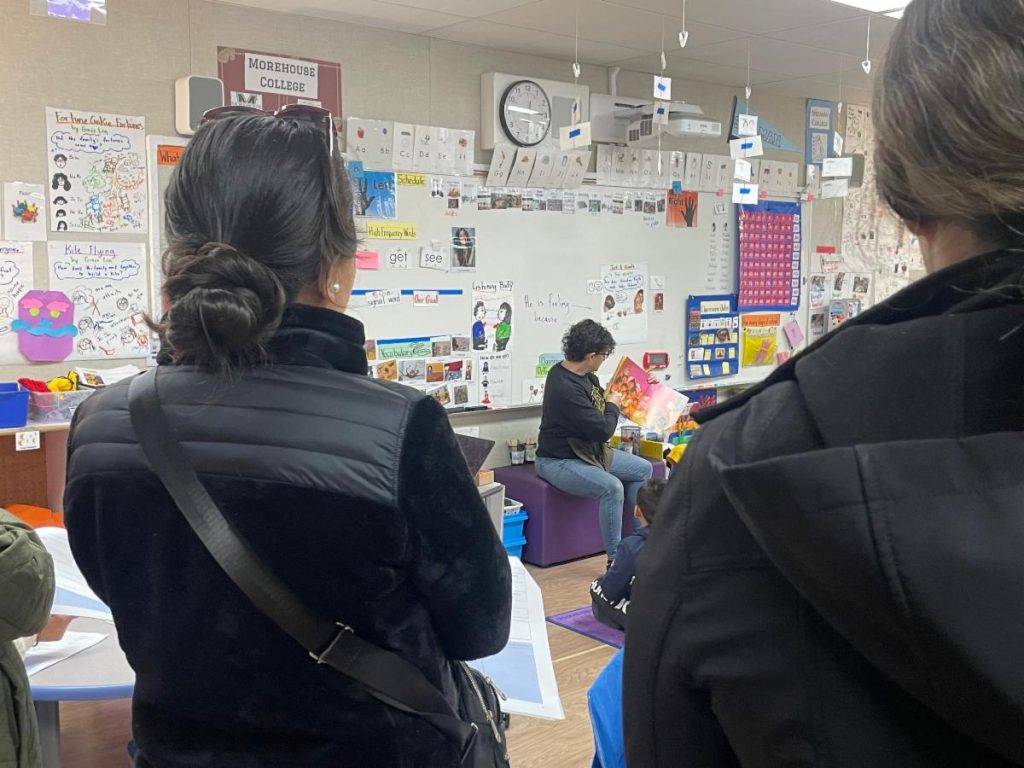
“Working in small groups, you can really see how that helps the teacher pay more individual attention to the students,” Thania said.
After the classroom observations, Thania and the other parents gathered with Kaitlin to debrief and share their observations. They talked about literacy strategies for everyday life, like identifying words and letters on boxes of food at the grocery store.
Kaitlin said it’s important to have parents on campus like this and observe instruction in classrooms because “this school exists for our families, we’re here to serve them.”
“Having them physically here on campus, not only do we get their perspective but they get to see what their child is learning,” she said. “They have ideas that we don’t have. They can pick up on what was most helpful to them and then share it with other families.”
For Thania, it was not just observing classrooms that made the family instructional walk worth her time. It was also the opportunity to talk to educators and staff, and to meet other parents.
“I think building relationships goes a long way,” Thania said. “Some of the parents here don’t speak English and that prevents them from communicating with the teacher, or they can be scared to raise their voice. I feel like today we are breaking down barriers to get parents involved. Especially for me, as a new mom.”