When a group of San Leandro High School upperclassmen student leaders sat down to reflect on their spring A-G workshop season, they kept coming back to something: they wished someone had shared this information with them sooner.
Over the course of two months, 15 student ambassadors facilitated 22 peer-led workshops reaching 500 freshmen, all focused on A-G requirements and college eligibility.
A-G requirements are the high school courses students must complete, with a letter grade of a “C” or higher, to be eligible for admission to a University of California or California State University school.
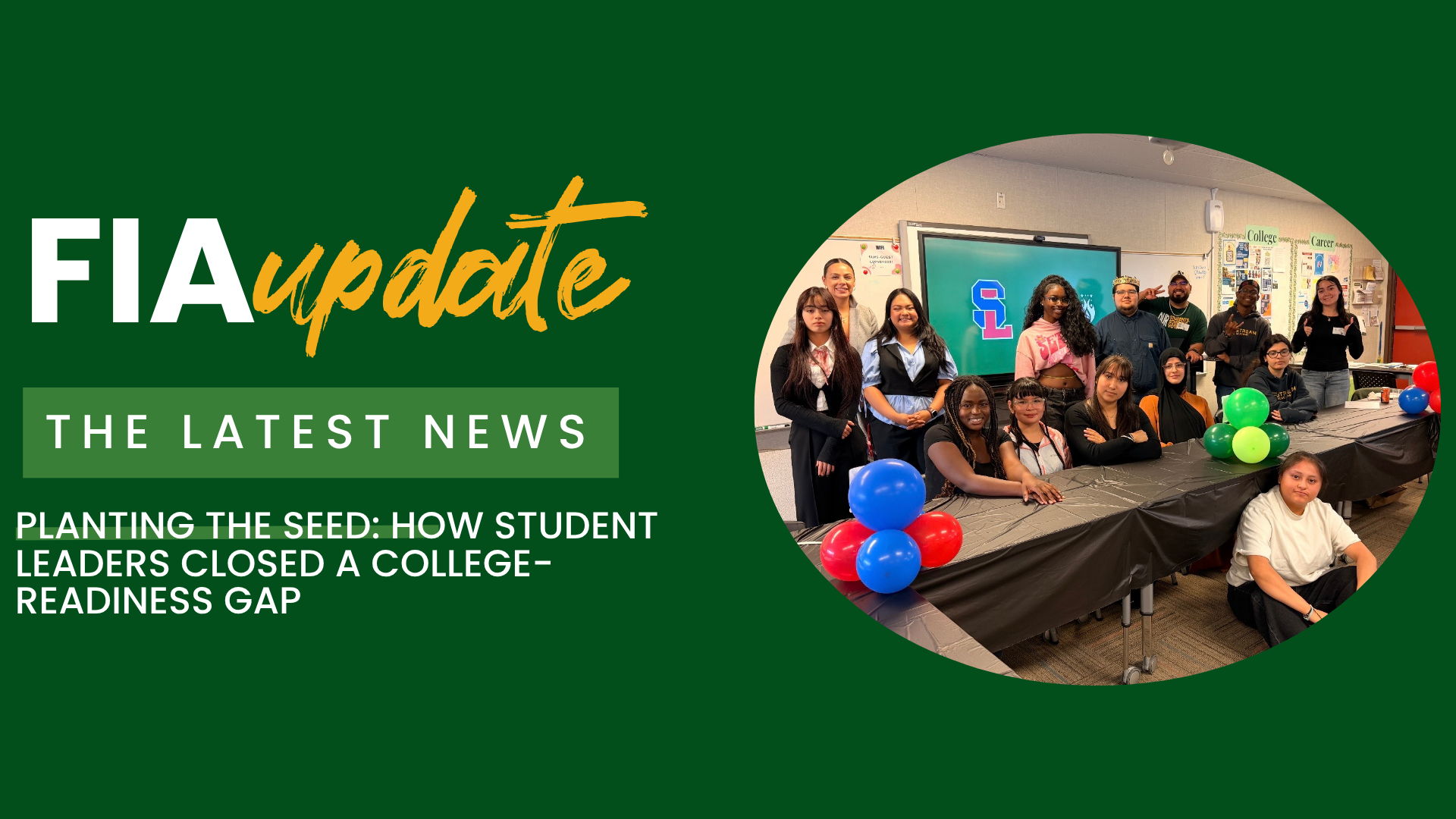
The group celebrated their work at the College & Career Center on campus, where Families in Action organizers recognized them with a reflection session, lunch, and certificates.
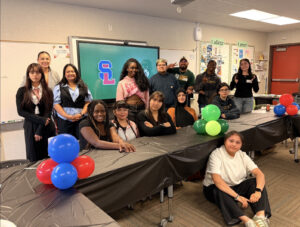
San Leandro High School Youth Leaders and staff celebrating the 55% increase of San Leandro High Students knowing the A-G requirements
“They did an amazing job this year,” said Javier Barraza, Director of 6-12 Organizing at Families in Action, “and they did it on such a quick timeline. When we first saw the data, it was all very new to them to see what students at their school knew about their actual educational rights. They were surprised, and they took it very seriously.”
Before the workshops, just 28.2% of San Leandro High students could correctly identify the A-G requirements. Afterward, 83.2% could.
“The biggest impact was when we had our first meeting and a lot of the seniors were talking about how they didn’t know what A-G was,” said Sophie David, the College & Career Program Coordinator at San Leandro High. “They wanted to give back and tell the freshmen, ‘I wish I knew this.’”
Student leader Steven Tapias said he was one of those students who didn’t know about A-G requirements when he was an underclassman.
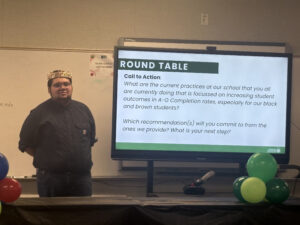
Steven speaking at the Celebration of Learning on the importance of A-G knowledge at high school for all grade levels
“I didn’t know what classes to pick. I didn’t know how they would benefit me,” he said. “Definitely letting students know early on is better for them to plan their future.”
Maria Abervilla, another San Leandro student leader, said she could see the impact the information was making on her fellow students.
“It was refreshing to see freshmen realize, ‘Oh my God, I actually need to plan for my future,’” she said. “Whether they know what they want to do or not, let’s have that option.”
When the student leaders presented recommendations based on their research and experience with peers in the workshops, they named three priorities: clear guidance from every adult in the building, real support, such as tutoring and accessible counselors, and peer guidance through near-peer mentorship and real stories from students who have been there. These recommendations were presented to the network superintendent and principal.
One student explained why peer guidance matters. “Teachers have been through the same classes probably years ago,” they said during a group discussion. “They’re not as up to date on how we feel now. Kids taking AP classes look up to upperclassmen who have also taken AP classes. They know more about the exam and the workload.”
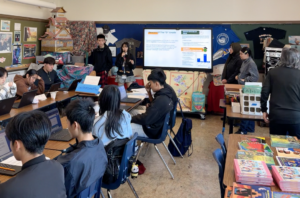
Student Leaders sharing the importance of understanding that the grade level “D” does not satisfy the completion of the course as an A-G requirement
Dr. Ruby Nee, Director of Teaching, Learning, and Educational Equity for Secondary Education at SLUSD, listened to the students’ recommendations and joined the discussion. She shared why this work feels especially urgent. “When I reviewed our A-G completion data last year, it highlighted significant disparities in outcomes for different student groups,” she said. “The completion rates for our Black students and English learners were considerably lower than we want them to be. These patterns reflect systemic challenges that require our attention and action.”
She continued, “Families trust that our schools are preparing students for the broadest range of postsecondary opportunities. We have a responsibility to be transparent about what different pathways require and to ensure students have equitable access to college-ready coursework. Our goal is for every student to have the opportunity to pursue the college or career pathway of their choice.”
Dr. Nee also shared that SLUSD is taking action to address some of the gaps students identified.
This year, the district updated graduation requirements at San Leandro High School and San Leandro Virtual Academy. Beginning with the Class of 2030, students will be required to complete three years of mathematics and two years of world language.
These changes are designed to strengthen academic preparation and expand future opportunities after high school, and they reflect the district’s commitment to equity, rigorous learning, and ensuring every student graduates ready for college, career, and beyond.
The celebration ended with a group photo and time for the team to be together, honoring not just the data but the work they all put into it.
As one student put it, “You never know how you’re helping to water and plant a seed. Even if you don’t see that seed fully grow, you have to nurture it.”