 Parents Become Partners in Literacy at Sankofa
Dayshunnay has been a Sankofa parent since her daughter started kindergarten. Now her daughter is in fourth grade, and Dayshunnay wants to know how she can better support her with her reading.
“She’s really smart,” Dayshunnay said. “She has a lot of potential.”
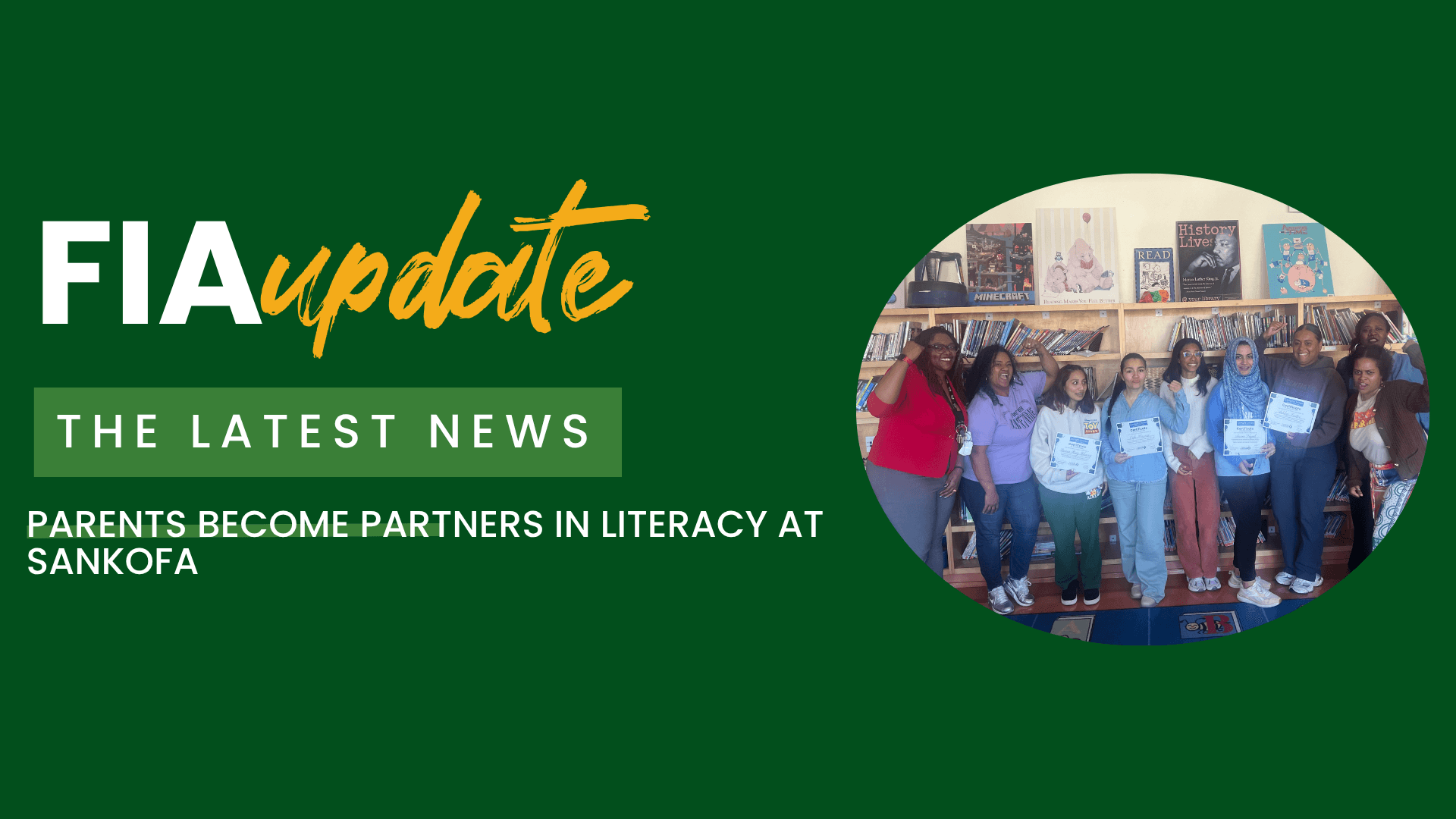
Dayshunnay recently attended a Family Accountability Walk, the final of four Lit for Literacy sessions at Sankofa. For four weeks, parents had been meeting, learning about literacy strategies, and preparing to step into classrooms to observe literacy instruction.
Before the walks began, Principal Dr. Charquita Arnold gathered the parents to set the focus. She wanted them to look for specific things: content, teacher role, student role, and evidence of differentiation.
She also wanted parents to notice who was doing most of the talking. “We want student voices,” she said. “Do you hear students talking to each other?”
“One of our big goals is for all students to be reading on grade level by the third grade,” she said later. “That’s such an important lift. This is not just a problem at Sankofa. This is a problem across Oakland and many other places. It’s going to take all of us collectively coming together to make sure that we do work inside the school, outside of the school, to tackle this.”
She sees parents as essential partners in that work. “Family buy-in — you can’t do it without them,” she said. “They are the champions in their children’s lives. They know what motivates them.”
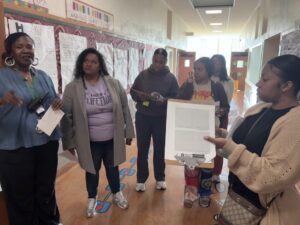 Families learning best practices to being literacy partners with their students!
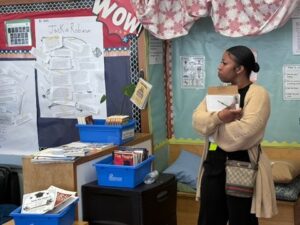
Parents fanned out into classrooms, understanding what to look for. They visited kindergarten, second grade, fourth grade, and fifth grade, taking notes on what they observed.
For Dayshunnay, one classroom stood out immediately. The teacher was engaged, relatable, and had everyone’s attention.
“She made sure that she went around to see what each student needed,” Dayshunnay said. “She was really good. She spoke their language, but still had everyone’s attention.”
While observing her daughter’s classroom, Dayshunnay noticed something different. Students were less engaged, less involved. The contrast left her feeling emotional.
“I want her to know that getting a good education means putting yourself first,” Dayshunnay said. “Learning is good for your mental health; it prepares you for what you want to do in the world.”
For Dayshunnay, education is personal. She grew up in Oakland and attended the same school (then called Washington Elementary), an experience she still treasures.
“We learned so much,” she said, remembering a particular teacher. “She knew us. She grew with us. She knew how to handle us. She was on us.”
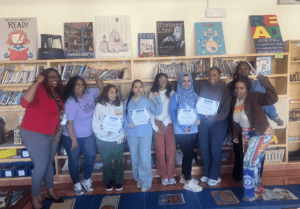 Ashley (third from right in the brown hoodie) with her fellow Sankofa Lit for Literacy cohort!
Ashley, another parent in the group, came for different but related reasons. Her daughter is in third grade and struggles with literacy. Her older sons never needed help, but the younger child is different.
“I’m not an educator, and I have no idea how to assist her,” Ashley said. “I’ve been asking for assistance, but it’s hard.”
Lit for Literacy has given her confidence.
“I now know I don’t need to necessarily be an educator to be able to help her,” she said. “It also gave me the resources to understand where she needs to be and how far she’s come, to see the improvement that she’s made.”
Instructional Coach Ayanna Dupree has been at Sankofa full-time since January, after splitting her time between two schools. She loves seeing parents engaged.
“I feel like if parents are aware of what’s going on with their students in their classroom, they can advocate for their students, for the school community,” she said.
She sees the potential for growth. “I just wish we had more parents. I’m hoping that next year we can grow,” she said.